











Mechanical Durability: How Our Factory Tests Lever Fatigue
Intro
When you pick up a nail clipper at home, you expect it to work smoothly month after month—no loose levers, no stuck springs, no sudden breakage after repeated use. Behind every durable nail clipper lies strict mechanical durability testing, especially lever fatigue testing.
Lever fatigue is one of the most common failure points for manual nail clippers. Frequent pressing, bending, and force application will gradually wear down the metal lever, cause material fatigue, and eventually lead to deformation or fracture. Today we’ll take you inside our factory lab to break down how we conduct professional lever fatigue tests to guarantee long-lasting performance for every nail clipper we manufacture.
[ Concept: Factory Lever Fatigue Test Workstation]
(Text description for illustration insertion)
Automatic lever fatigue testing machine in our factory lab. The fixture clamps a finished nail clipper firmly; the mechanical arm repeatedly presses the clipper lever at a fixed frequency and standard force. A data display screen records real-time cycle counts, stress value, and lever deformation degree. The background shows raw metal lever parts and finished nail clipper samples waiting for testing.
Why Lever Fatigue Testing Matters for Nail Clippers
A nail clipper’s lever bears the main pressing force every time you trim nails. Low-quality levers often suffer from:
- Permanent bending after hundreds of presses
- Cracks at the stress concentration corner
- Loose linkage between lever and spring
- Functional failure without obvious external damage
Without standardized fatigue testing, defective nail clippers will flow into the market, bringing poor user experience and brand reputation loss. Our factory sets strict fatigue standards to eliminate unqualified components before assembly.
Core Lever Fatigue Test Parameters Table
| Test Item | Standard Parameter | Test Condition | Qualification Standard |
|---|---|---|---|
| Fatigue Cycle Count | 50,000+ cycles | Continuous automatic pressing | No crack, no fracture, no obvious bending deformation |
| Test Pressing Force | 15–25 N | Simulate daily human pressing force | Lever rebound remains normal after long cycles |
| Test Frequency | 30 cycles per minute | Stable mechanical reciprocation | No stuck or lagging pressing feedback |
| Ambient Temperature | 25℃ ± 3℃ | Normal room temperature storage & use | Performance unchanged under conventional ambient conditions |
| Sample Selection | Random 5% from each batch | Finished nail clipper random sampling | All tested samples pass; batch approved only if zero failure |
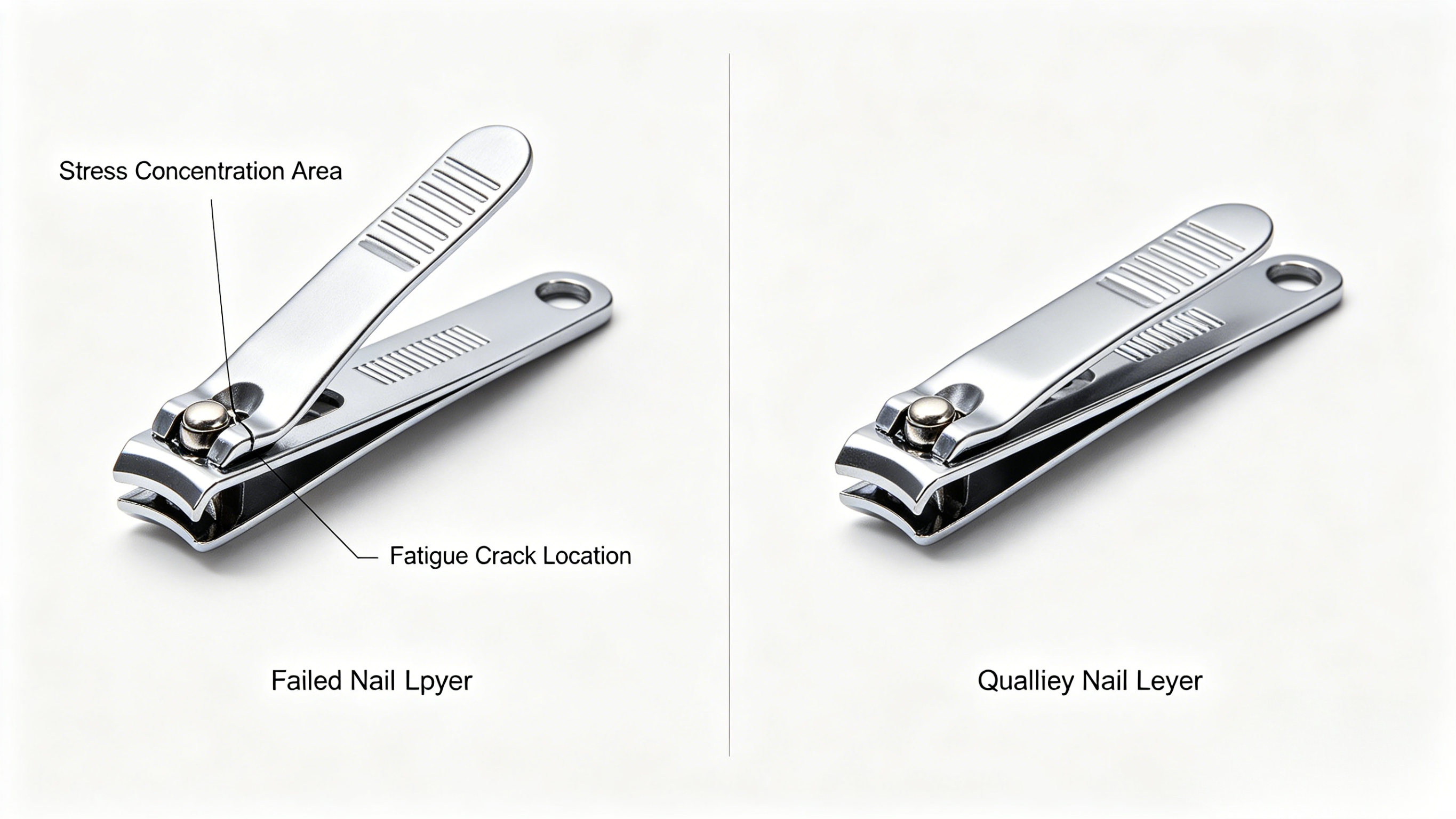
[Concept: Nail Clipper Lever Fatigue Failure vs Qualified Sample Comparison]
(Text description for illustration insertion)
Il Side-by-side comparison chart of two nail clipper levers.Left: Failed lever after fatigue test — obvious bending deformation, tiny crack at the connection point, uneven rebound.Right: Qualified lever after 50,000+ cycles — intact structure, no deformation, smooth pressing and rebound. Label marks stress concentration area and fatigue crack position clearly.
Our Factory’s Step-by-Step Lever Fatigue Testing Process
Step 1: Sample Preparation
We randomly select finished nail clipper products from the production batch, remove surface oil and dust, and inspect the lever for initial scratches, burrs or minor defects. Only flawless original samples enter formal testing.
Step 2: Fixture Mounting
Fix the nail clipper on the fatigue testing machine’s dedicated mold. The mold is customized according to different nail clipper sizes to ensure the force point is consistent with actual human hand pressing posture, avoiding test data deviation caused by improper clamping.
Step 3: Set Standard Test Data
Technicians input the parameters in the table above: pressing force, cycle frequency and target cycle count. The system starts automatic constant-load pressing without manual intervention.
Step 4: Real-Time Data Monitoring
Sensors track stress change, lever displacement and rebound resilience in real time. If abnormal deformation or sudden force drop occurs during the test, the machine automatically alarms and records the failure cycle number.
Step 5: Post-Test Inspection & Batch Judgment
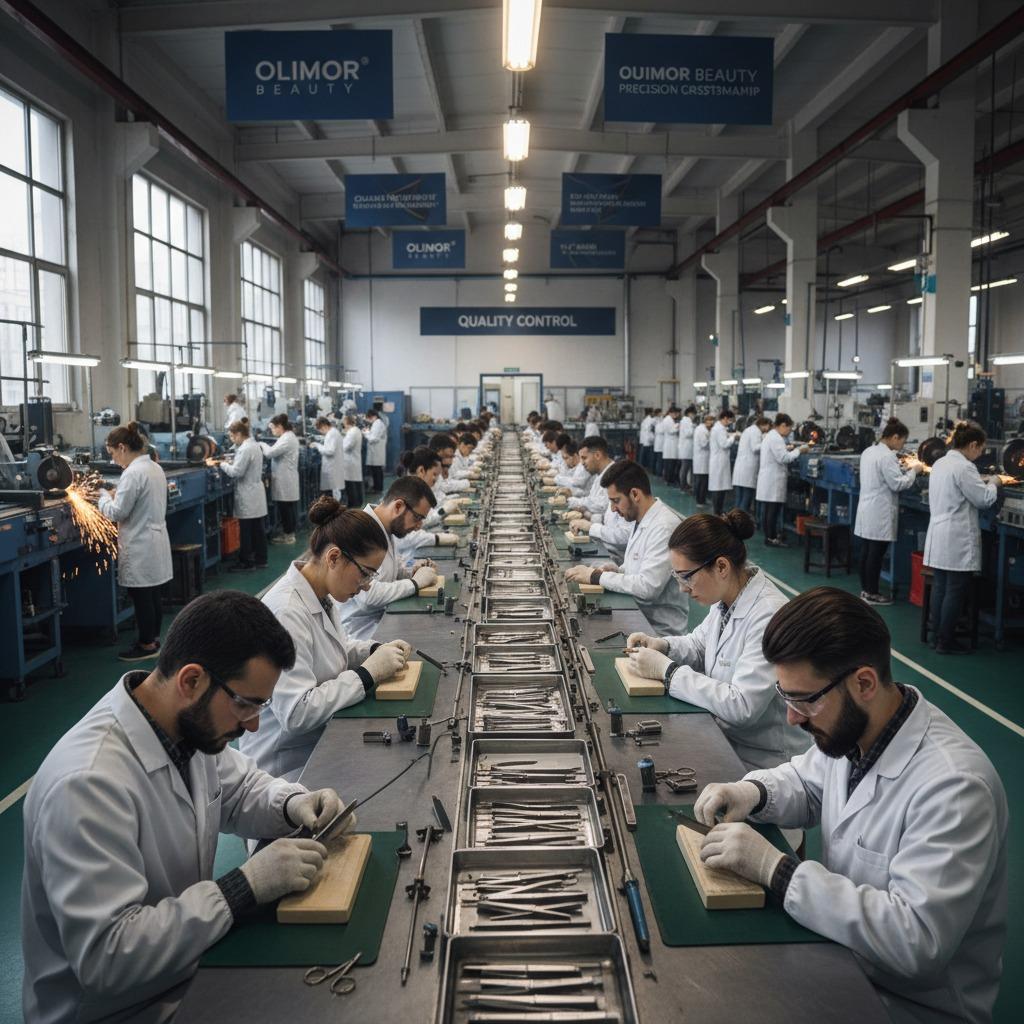
After reaching the standard cycle count, technicians disassemble and check the lever microstructure, surface crack and elastic performance. If all sampled nail clippers meet the standard, the whole batch is released; if any sample fails, the whole batch will be rechecked and the raw material formula or stamping process will be optimized.
How Testing Improves Nail Clipper Mechanical Durability
- Material Screening: Fatigue test data helps us select high-hardness, anti-fatigue alloy steel for clipper levers, reducing metal fatigue risk fundamentally.
- Structural Optimization: We adjust lever radian and stress concentration position based on test failure feedback, making the force bearing more uniform.
- Process Upgrade: Optimize stamping, polishing and heat treatment craft to enhance the lever’s overall toughness and endurance.
- Stable Consistency: Unified test standards ensure every batch of nail clipper keeps the same mechanical durability, no quality fluctuation.
Conclusion
Mechanical durability is the core competitiveness of a qualified nail clipper, and lever fatigue testing is the key line of defense for product quality. Through standardized cycle tests, precise parameter control and strict sample inspection, our factory ensures every nail clipper can withstand long-term repeated daily use, maintaining stable hand feel, intact structure and long service life.
Quality is not accidental—it is guaranteed by professional fatigue testing and rigorous industrial standards.