











Surface Treatment Protocols: Electrophoresis vs. Electroplating for Premium Nail Clippers
In the competitive world of personal care tools, nail clippers demand durable, corrosion-resistant, and aesthetically pleasing surface treatments. Two leading protocols—electrophoresis (also known as electrophoretic deposition or E-coating) and electroplating—stand out for manufacturers seeking optimal performance and visual appeal. This guide compares these techniques, focusing on their application to nail clippers.
Understanding Electroplating
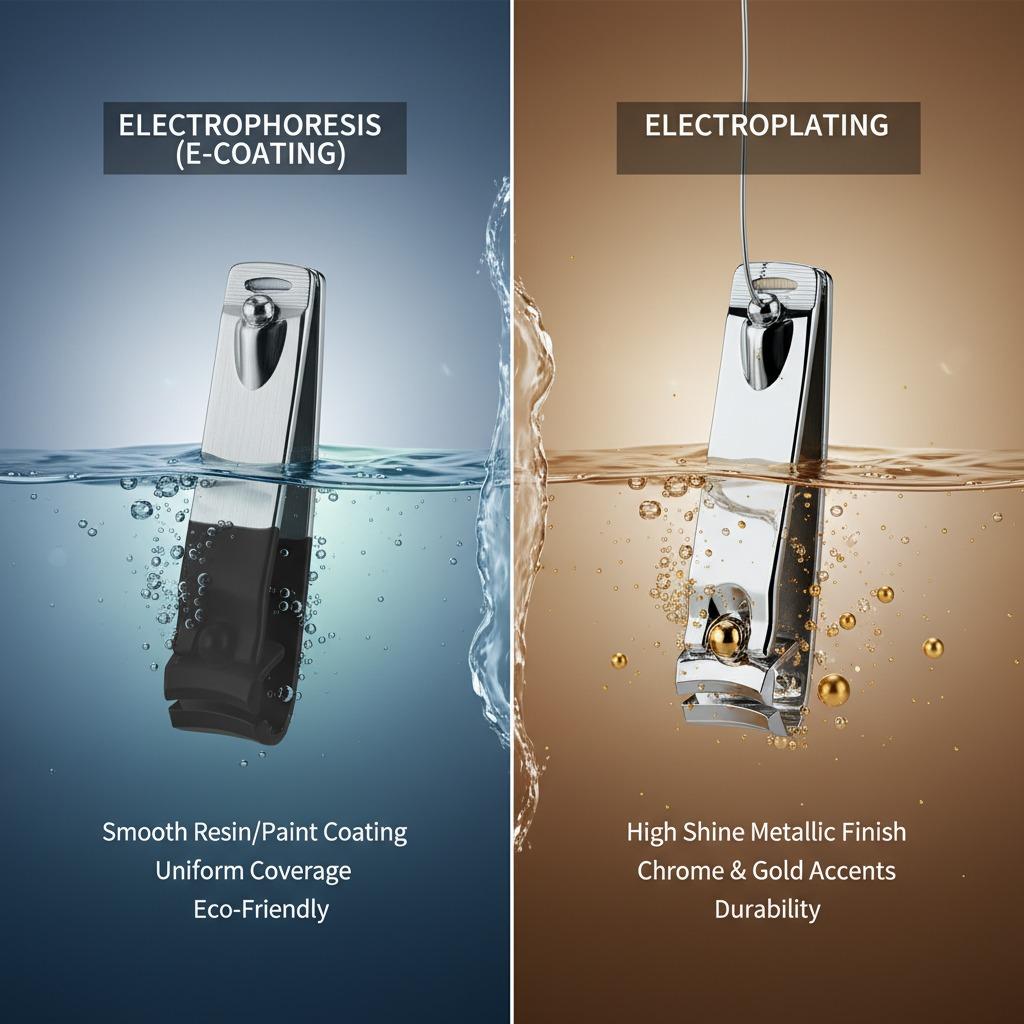
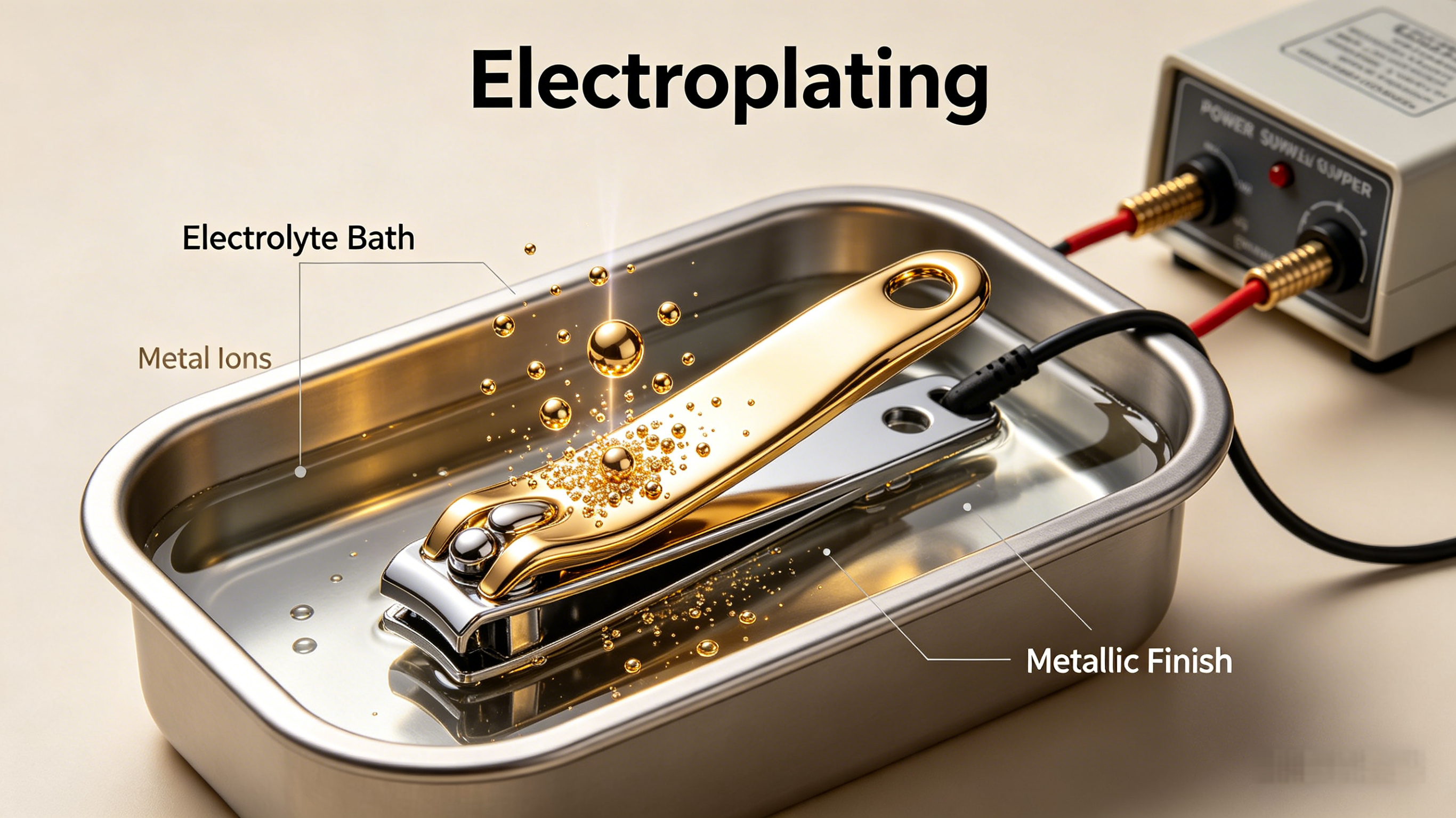
Electroplating deposits a thin layer of metal (such as nickel, chrome, gold, or zinc) onto the conductive surface of a nail clipper using an electric current. The nail clipper acts as the cathode in an electrolyte bath containing metal ions. These ions reduce and adhere to the surface, forming a metallic coating.
Key Characteristics:
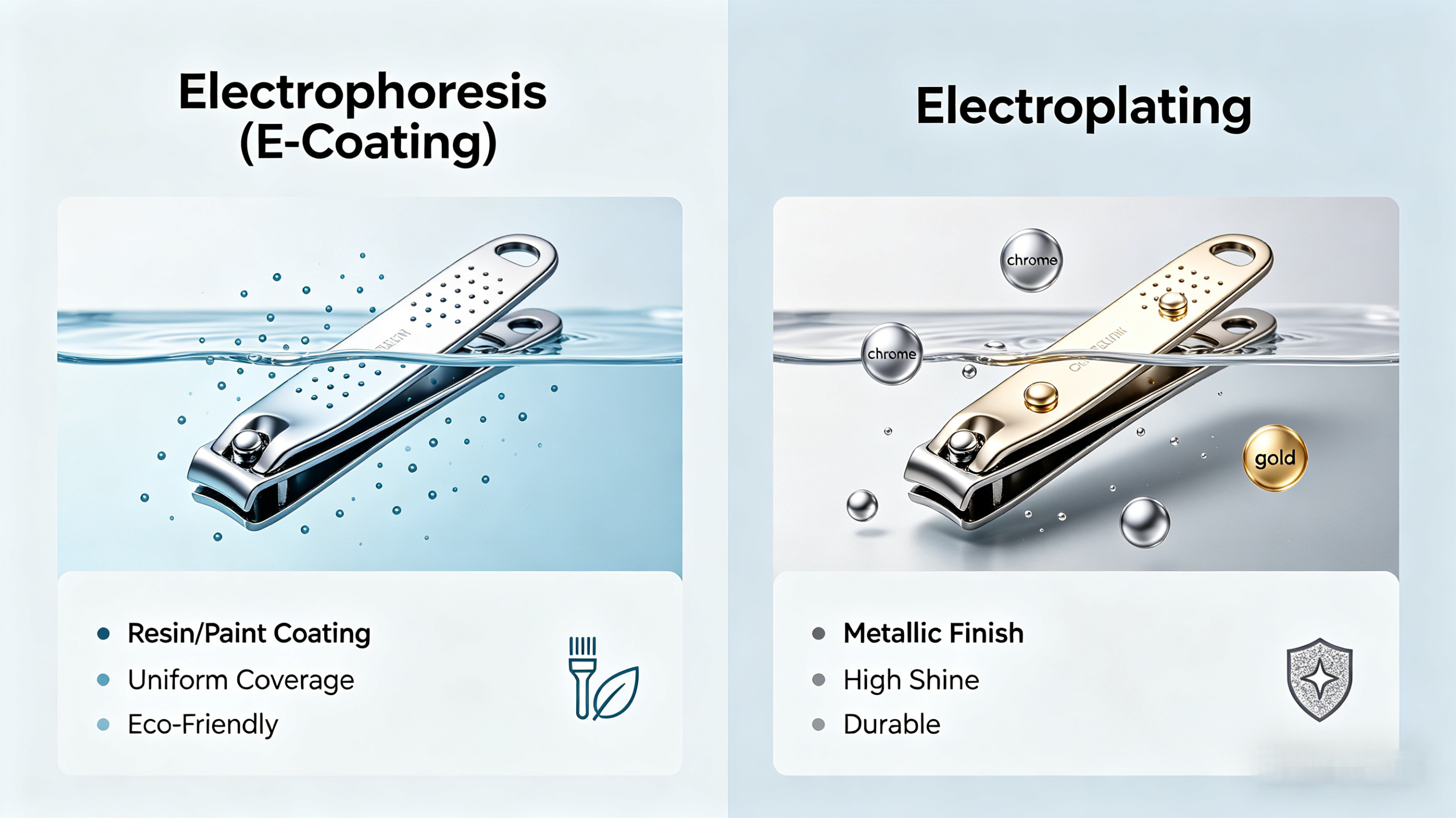
- Produces a genuine metallic finish with high shine and premium feel.
- Enhances hardness, wear resistance, and conductivity.
- Common for decorative and functional nail clippers.
Understanding Electrophoresis (E-Coating)
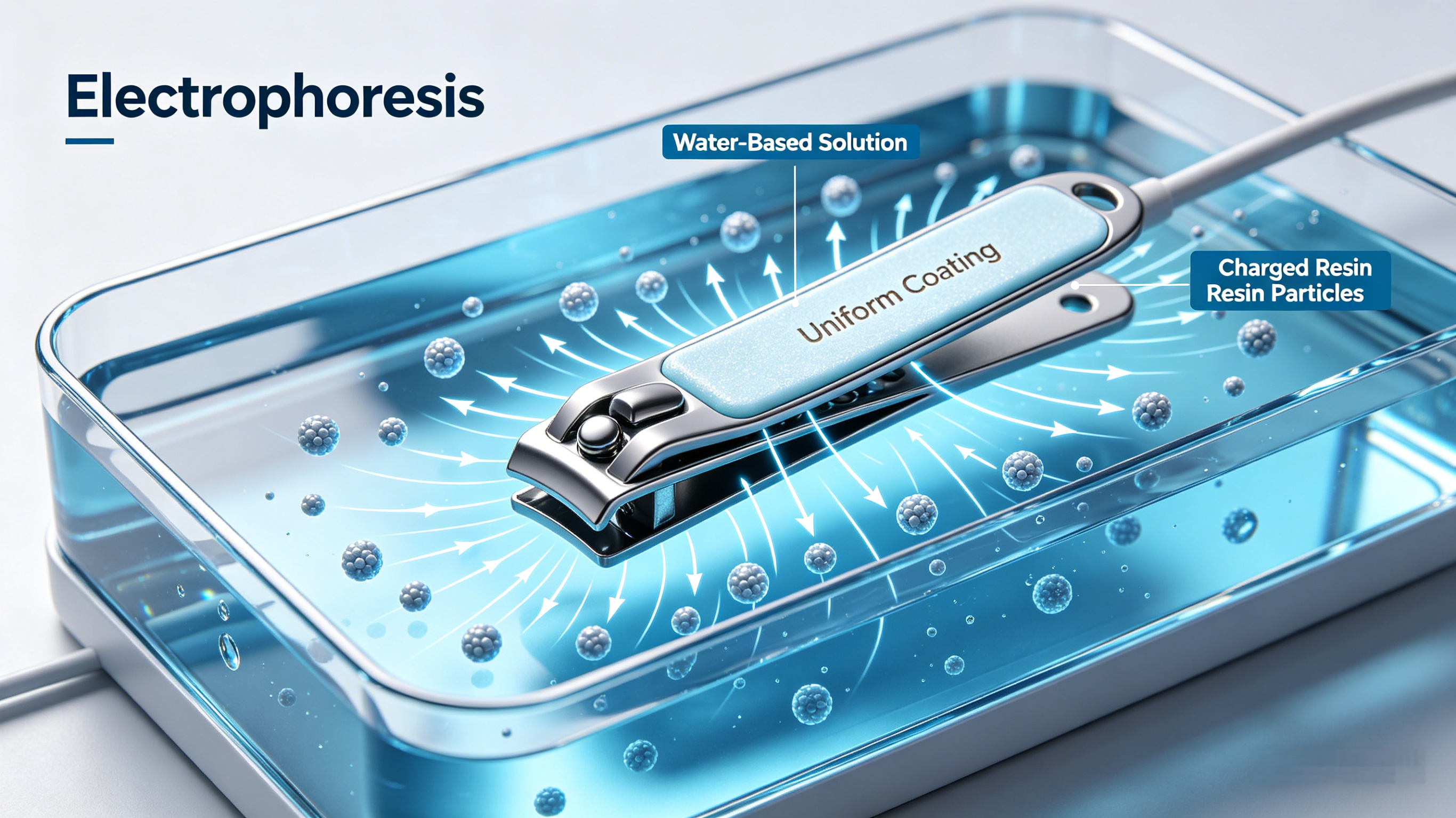
Electrophoresis, or electrophoretic deposition, suspends charged paint/resin particles in a water-based solution. An electric field drives these particles to deposit uniformly onto the oppositely charged nail clipper surface. It is then cured (baked) to form a protective polymer layer.
Key Characteristics:
- Applies a resin/paint-based coating (often epoxy or acrylic).
- Excellent "throwing power" for uniform coverage, even in recesses and complex geometries.
- Environmentally friendlier with water-based, low-VOC formulations.
Head-to-Head Comparison
| Aspect | Electroplating | Electrophoresis (E-Coating) |
|---|---|---|
| Coating Material | Metal (e.g., Ni, Cr, Zn) | Resin/Paint (polymer) |
| Finish Appearance | Shiny metallic, premium luster | Smooth, can be matte/glossy, colored |
| Uniformity | Good on exposed surfaces; may vary in recesses | Excellent, superior coverage on complex shapes |
| Corrosion Resistance | Strong (especially with chrome/nickel) | Excellent, especially in humid environments |
| Durability/Wear | High mechanical strength & hardness | Good impact resistance, flexible |
| Cost | Higher (materials + process) | Lower, more efficient for volume |
| Environmental Impact | Higher chemical use, wastewater concerns | Lower VOC, more eco-friendly |
| Thickness Control | Precise but can be uneven | Highly uniform |
| Best For Nail Clippers | Luxury metallic look, heavy daily use | Everyday durable protection, color options |
Advantages and Trade-offs for Nail Clippers
Electroplating excels when a high-end metallic appearance is critical. It gives nail clippers that classic polished steel or gold-plated luxury look consumers love. The metal layer boosts scratch and wear resistance, ideal for frequent use. However, it may struggle with complete coverage in tight hinge areas or blade recesses of complex nail clipper designs and involves more rigorous waste treatment.
Electrophoresis shines in uniform protection and production efficiency. It coats every nook of the nail clipper evenly, reducing rust risk in humid bathrooms. It's cost-effective for mass production and supports a wide range of colors. The finish is more "painted" than metallic, which suits modern or matte designs but may lack the cold metallic prestige of plating.
Choosing the Right Protocol for Your Nail Clippers
- Premium/Luxury Lines — Opt for electroplating (e.g., nickel-chrome) for that irresistible metallic gleam and robust wear performance.
- Everyday/High-Volume Production — Choose electrophoresis for superior coverage, corrosion protection, lower costs, and sustainability.
- Hybrid Approaches — Some manufacturers combine both: electroplate for base protection and aesthetics, then add a clear electrophoretic topcoat for extra durability.
Many professional nail clippers today leverage these treatments to ensure they remain sharp, rust-free, and stylish for years.
Conclusion
Both electrophoresis and electroplating are powerful surface treatment protocols that elevate nail clipper quality. Electroplating delivers unmatched metallic beauty and hardness, while electrophoresis offers unmatched uniformity and efficiency. The best choice depends on your target market, design complexity, budget, and environmental priorities.
Understanding these protocols helps consumers appreciate the engineering behind reliable, long-lasting nail clippers—and helps manufacturers deliver superior products.